Beverley and Barmston Drain
Beverley Road
Beverley and Barmston Drain
Explore the route
History and origins
Beverley Road and the drain
The drain curves round to flow under Beverley Road at its junction with Inglemire Lane (the lane through the Igglemire or leech-pool). A 60-foot-wide highway from Hull to Beverley was established by 1305 and it became a turnpike road in 1744, with a toll house at the junction with Cottingham Road.
Transport and development
Beverley Road and the tramway
The present bridge probably dates from July 1926, when tram service B was extended northwards from the Beverley Road / Cottingham Road junction to Endike Lane. The central reservation of the dual carriageway, which starts just north of the bridge was originally laid out to separate trams from other road traffic. The Beverley Road trams were withdrawn in 1938 and trees and shrubs planted on the central reservation.
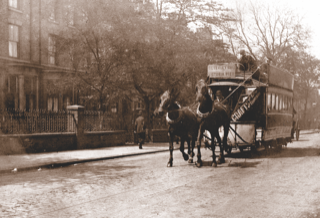
A horse drawn tram on Beverley Road (PG)
Endsleigh and the local area
Endsleigh Convent and Teachers’ Training College
Just to the south of the drain bridge, on the south side of Inglemire Lane and west side of Beverley Road, a brick wall surrounds the site of the former Endsleigh Convent and Endsleigh Teachers’ Training College (1905-1974), established by the Sisters of Mercy. Much of the site has been cleared for new housing and the convent buildings have been converted into flats, including Dawson House, built as Endsleigh House in 1876-77 by brewer William Glossop and purchased by the Sisters of Mercy in 1900 to form a convent and Endsleigh Roman Catholic teachers’ training college (1905-1974).
Partners
Hull’s Dynamic Drains is led by the Environment Agency and delivered in partnership with Hull City Council , Groundwork Yorkshire and Yorkshire Wildlife Trust .