Hull’s Dynamic Drains
Dock Cycleway
Historically, where are we now?
Holderness Drain locations
The view from this board gives the first clear view of the Holderness Drain, which is the accepted boundary of two ancient areas known as Marfleet, and Southcoates-In-Drypool.
Marfleet to the east of the drain – was a tiny hamlet on the banks of the Humber, established over 1,000 years ago. It was mentioned in the Domesday Book of 1086 as the manor of Mereflet, when there were just five households recorded there.
The derivation of Marfleet – ‘pool stream’ – relates to this area being very low lying and likely to flood, with several drains or streams in the area falling out into the Humber.
The parish was initially separated from Drypool – to the west – by the River Wilflete (later developed as the Holderness Drain), from Bilton on the north by Marfleet Old Drain, and from Preston on the east by the Old Fleet.
A sewer in Marfleet is mentioned by the late 14th century, and new drains were proposed as part of the enclosure awards in the 1760s. Following several aborted plans for drainage schemes in the 18th and 19th centuries, it was not until 1832 that work began on Holderness Drain, which was to empty into the Humber at Marfleet.
Marfleet had become a parish independent of its mother church at Paull by the early 18th Century, when nearby villages could only be accessed by ancient footpaths.
By 1768, what we now know as Marfleet Lane ran from the village to the Holderness Road, and the old lanes and paths were all linked to the new Hull to Hedon Turnpike road in 1833.
The Village of Marfleet was absorbed into the borough of Hull in 1882, following the absorption of Drypool (including Southcoates) in 1837, as the population of Hull followed its developing trade, industry, and docks along the new Hedon Road.
The population of the tiny hamlets grew massively with the rapid expansion of Hull in the 19th century; Drypool’s population, including Southcoates, was 436 in 1801 and had increased to 2,748 by 1851.
Following the establishment of the Hedon turnpike road, and the huge rise in population moving east to serve the new industries and docks along the Humber banks, Hull’s trams were soon extended beyond the city limits.
From 21st May 1889 Hedon Road had a steam tramway that ran as far as a terminus at Lee Smith Street, ceasing on 13th January 1901.
A new electric tramway was opened 17th December 1903, running past a newly built Hedon Road Tram Depot on the north side of the road (the building survives but has been re-fronted) to the extended ‘Marfleet terminus’ at the bridge over the Holderness Drain.
In December 1912 the terminus was extended to the corner of Marfleet Avenue,
Explore Holderness Drain
Project Partners
Hull’s Dynamic Drains is led by the Environment Agency and delivered in partnership with Hull City Council , Groundwork Yorkshire and Yorkshire Wildlife Trust .
Historically, where are we now? The view from this board gives the first clear view of the Holderness Drain, which is the accepted boundary of two ancient areas known as Marfleet, and Southcoates-In-Drypool.
Marfleet to the east of the drain – was a tiny hamlet on the banks of the Humber, established over 1,000 years ago. It was mentioned in the Domesday Book of 1086 as the manor of Mereflet, when there were just five households recorded there.
The derivation of Marfleet – ‘pool stream’- relates to this area being very low lying and likely to flood, with several drains or streams in the area falling out into the Humber.
The parish was initially separated from Drypool – to the west – by the River Wilflete (later developed as the Holderness Drain), from Bilton on the north by Marfleet Old Drain, and from Preston on the east by the Old Fleet. A sewer in Marfleet is mentioned by the late 14th century, and new drains were proposed as part of the enclosure awards in 1760s. Following several aborted plans for drainage schemes in the 18th and 19th centuries, it was not until 1832 that work began on Holderness Drain, which was to empty into the Humber at Marfleet.
Marfleet had become a parish independent of its mother church at Paull by the early 18th Century, when nearby villages could only be accessed by only ancient footpaths.
By 1768, what we now know as Marfleet Lane ran from the village to the Holderness Road, and the old lanes and paths were all linked to the new Hull to Hedon Turnpike road in 1833.
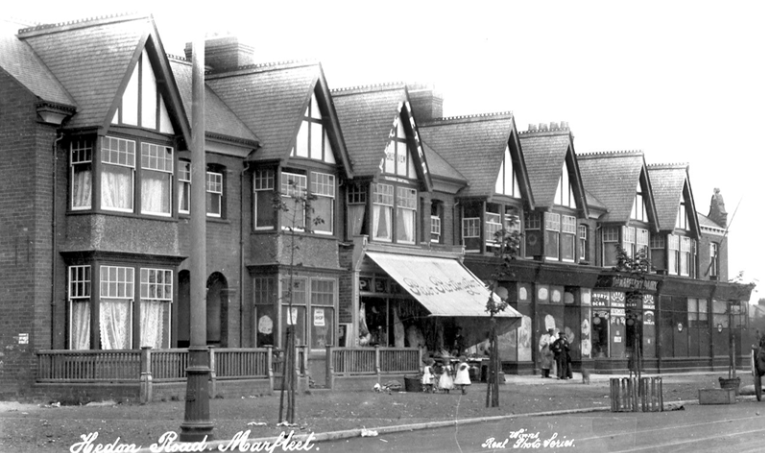
Hedon Road shops, corner of Marfleet Avenue c.1911
The Village of Marfleet was absorbed into the borough of Hull in 1882, following the absorption of Drypool (including Southcoates) in 1837, as the population of Hull followed its developing trade, industry, and docks along the new Hedon Road. The population of the tiny hamlets grew massively with the rapid expansion of Hull in the 19th century; Drypool’s population, include Southcoates, was 436 in 801 and had increased to 2,748 by 1851.
The Village of Marfleet was absorbed into the borough of Hull in 1882, following the absorption of Drypool (including Southcoates) in 1837, as the population of Hull followed its developing trade, industry, and docks along the new Hedon Road. The population of the tiny hamlets grew massively with the rapid expansion of Hull in the 19th century; Drypool’s population, include Southcoates, was 436 in 801 and had increased to 2,748 by 1851.
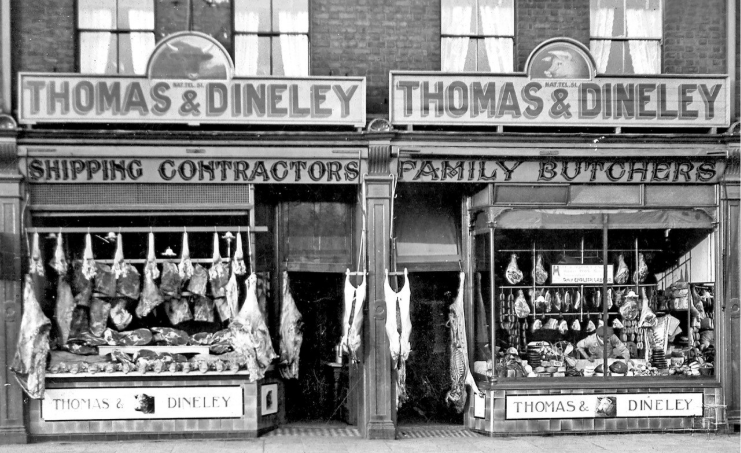
Dineley’s Shop 303-305 Hedon Road c.1910
Following the establishment of the Hedon turnpike road, and the huge rise in population moving east to serve the new industries and docks along the Humber banks, Hull’s trams were soon extended beyond the city limits. From 21st May 1889 Hedon Road had a steam tramway that ran as far as a terminus at Lee Smith Street, ceasing on 13th January 1901.
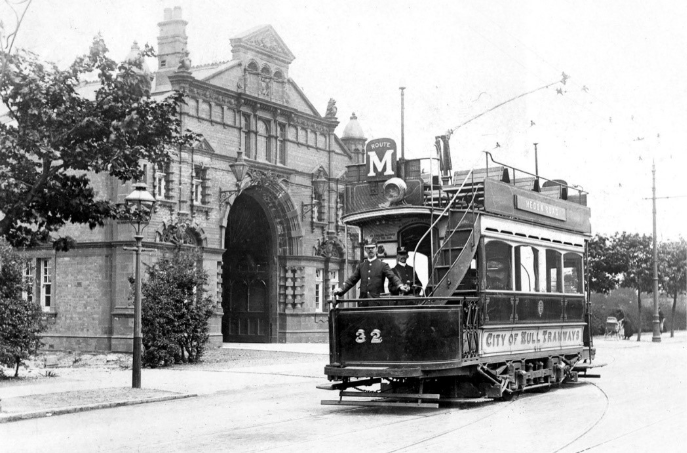
Marfleet Tram outside the Tram Shed on Hedon Road c.1904
A new electric tramway was opened 17th December 1903, running past a newly built Hedon Road Tram Depot on the north side of the road (the building survives but has been re-fronted) to the extended ‘Marfleet terminus’ at the bridge over the Holderness Drain. In December 1912 the terminus was extended to the corner of Marfleet Avenue, to serve the many new streets that had been built there. The electric trams ceased to run along Hedon Road on the 1st January 1938.