Holderness Drain • East Hull
Humber Tidal Doors
Discover the history of Hull’s docks, railway connections, hydraulic power and the changing role of Holderness Drain in supporting the city and its port.
Holderness Drain locations
The Port of Hull
The development of Hull Docks in the late 19th and early 20th centuries owed much to the business interests of two rival railway companies, The North Eastern Railway (NER) and The Hull and Barnsley Railway (HBR), responding to the rapidly growing need for transport links to the port of Hull from the coalfields and industrial towns of Yorkshire and Lancashire.
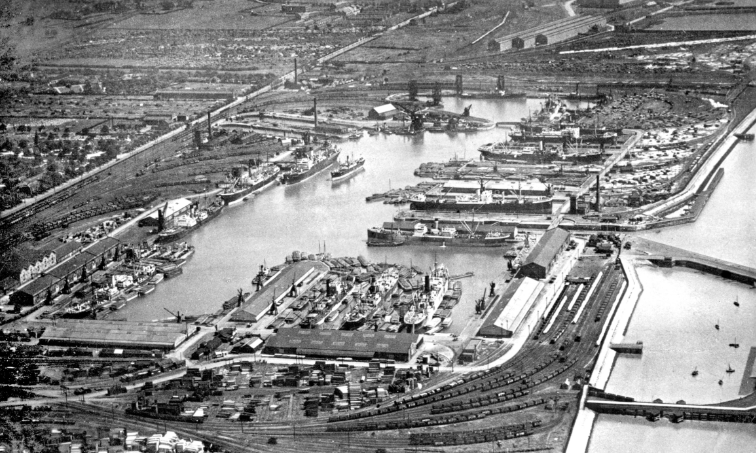
By 1905, Hull was England’s third largest port with a total water area of about 193 acres. To the west of you is Alexandra Dock, built for the Hull and Barnsley Railway and opened in 1885, to facilitate the export of coal from South Yorkshire and importation of timber pit props from Scandinavia.
To the east is King George Dock, opened in 1914 after an agreement between the two rival companies, the first fully electrically operated dock in the UK. The companies merged in 1923 to become the London and North Eastern Railway (LNER).
Both docks initially benefitted from the proximity of Holderness Drain, as pumps drew water from the drain and discharged into the docks, preventing the Humber mud from building up too much and keeping them clear for shipping.
Hydraulic Power
The Hull Hydraulic Power Company established in 1872 was the first company in the country to provide hydraulic power, and Hull can claim to be the first town to have had a public power supply station. It was hydraulic power that was used to open and close Alexandra Dock gates.
The company’s Pump House at Alexandra Dock survives and is a Listed Building. Another survivor from the hydraulic powered era is the 100-ton steam crane at the east end of the dock. Built in 1886, but disused from c.1980, it too is a Grade II Listed Building.
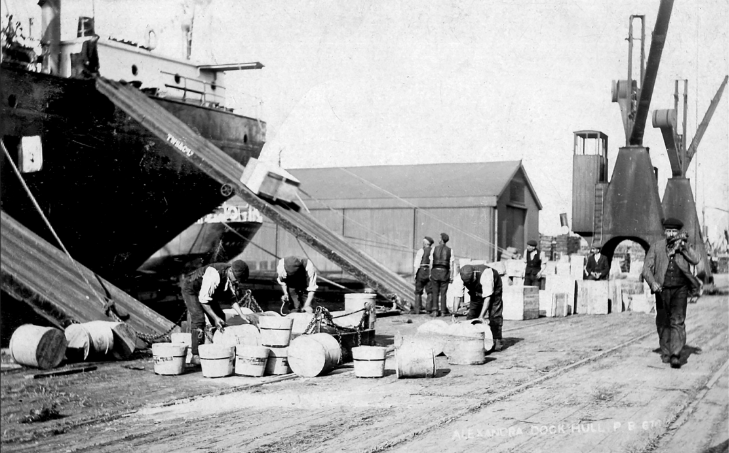
Even at the time of this c.1905 photograph, mechanised unloading equipment and hydraulic cranes that could lift 100 tons were available, but much of the unloading was still done by hand.
Pumping Stations on Holderness Drain
Holderness Drain has three pumping stations along its length. Two were built in 1972 to manage changes in level, the first at Tickton is now rarely used, while the second near Bransholme, is located close to the point of the original Great Culvert build in the 1830’s, which carried the high-level drain to the River Hull at Stoneferry, over the low-level drain to the Humber.
As part of the 1972 Holderness Drain scheme, the drain was widened and deepened between Great Culvert and Wawne Common. The pumping station was built across the drain to lift water up from the low-level system and combine it with water from the high-level Monkdike/Foredyke downstream of the pumping station. The rest of the Foredyke Stream, which had carried the high-level waters westwards through the city was abandoned.
The third pumping station was originally built on Hedon Road in 1949 to transfer water from the drain into the Humber when the tidal doors were closed. The station was expanded in 1972 by the Kingston Upon Hull Corporation to also pump the city’s sewage into the Humber, however this practice stopped in 2006 when the Saltend Wastewater Treatment Works was commissioned.
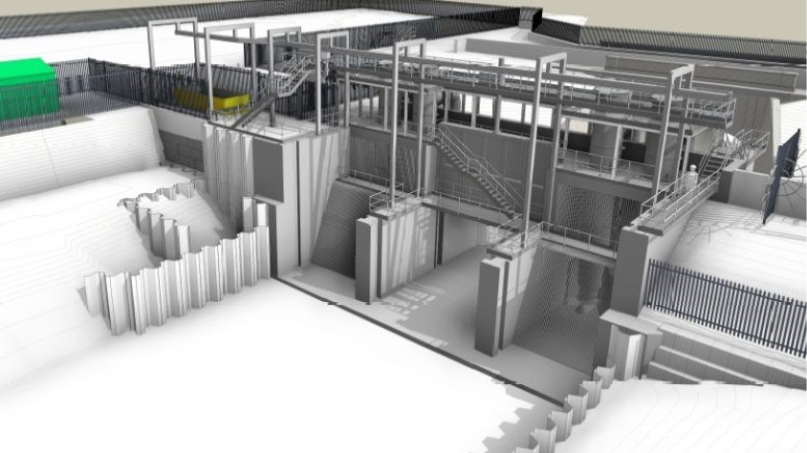
The ‘1949’ station was replaced by a new pumping station, completed in January 2024 just upstream of where you are standing now. Together with the Castle Hill Aquagreen, it has reduced flood risk for communities across east Hull, as part of the multi-agency Holderness Drain Flood Alleviation Scheme.
East Hull
Holderness Drain and the Port of Hull
From the development of Alexandra and King George Docks to the modern pumping infrastructure protecting communities across east Hull, Holderness Drain has played an important role in the city’s changing relationship with water.
Explore Holderness Drain
Project Partners
Hull’s Dynamic Drains is led by the Environment Agency and delivered in partnership with Hull City Council , Groundwork Yorkshire and Yorkshire Wildlife Trust .
The Port of Hull
The development of Hull Docks in the late 19th and early 20th centuries owed much to the business interests of two rival railway companies, The North Eastern Railway (NER) and The Hull and Barnsley Railway (HBR). responding to the rapidly growing need for transport links to the port of Hull from the coalfields and industrial towns of Yorkshire and Lancashire.
By 1905, Hull was England’s third largest port with a total water area of about 193 acres. To the west of you is Alexandra Dock, built for the Hull and Barnsley Railway and opened in 1885, to facilitate the export of coal from South Yorkshire and importation of timber pit props from Scandinavia.
Alexandra Dock from the air in 1905
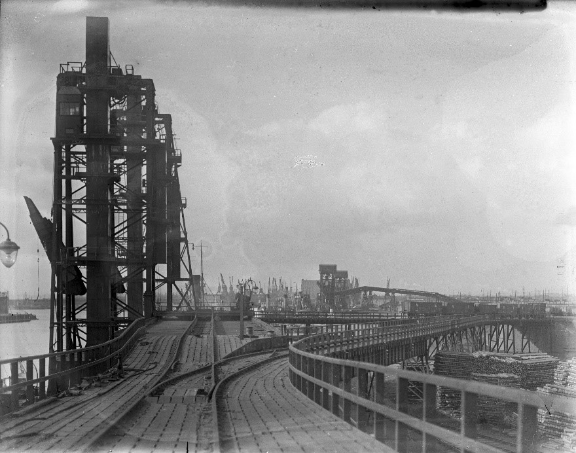
To the east is King George Dock, opened in 1914 after an agreement between the two rival companies, the first fully electrically operated dock in the UK. The companies merged in 1923 to become the London and North Eastern Railway (LNER).
A coal hoist that transferred coal from rail wagons onto ships at King George Dock 1926 ©The Board of Trustees of the Science Museum
Both docks initially benefitted from the proximity of Holderness Drain, as pumps drew water from the drain and discharged into the docks, preventing the Humber mud from building up too much and keeping them clear for shipping.
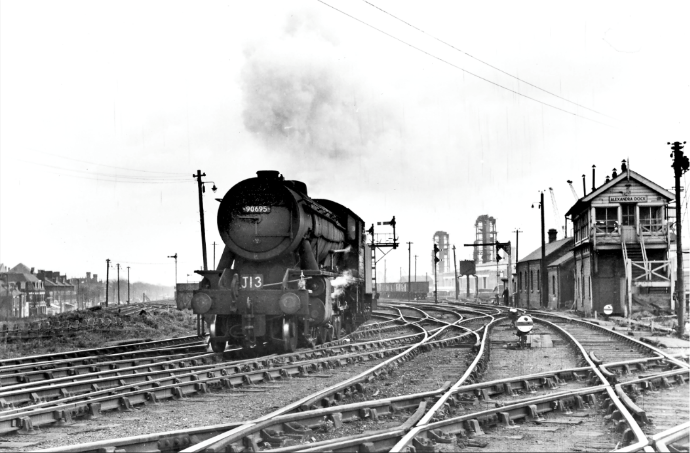
Railway sidings on Alexandra Dock
Hydraulic Power
The Hull Hydraulic Power Company established in 1872 was the first company in the country to provide hydraulic power, and Hull can claim to be the first town to have had a public power supply station. It was hydraulic power that was used to open and close Alexandra Dock gates.
The company’s Pump House at Alexandra Dock survives and is a Listed Building. Another survivor from the hydraulic powered era is the 100-ton steam crane at the east end of the dock. Built in 1886, but disused from c.1980, it too is a Grade II Listed Building.
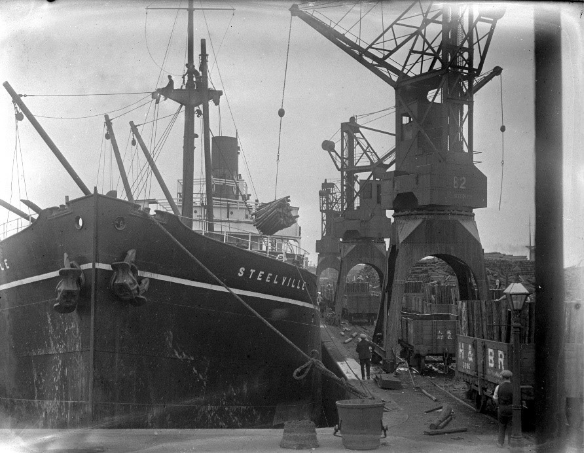
Hydraulic cranes unloading pit-props from SS Steelville in Alexandra Dock 1926 ©The Board of Trustees of the Science Museum
Even at the time of this c.1905 photograph, mechanised unloading equipment and hydraulic cranes that could lift 100 tons were available, but much of the unloading was still done by hand.
Dockers unloading a ship by hand on Alexandra Dock 1905
Pumping Stations on Holderness Drain
Holderness Drain has three pumping stations along its length. Two were built in 1972 to manage changes in level, the first at Tickton is now rarely used, while the second near Bransholme, is located close to the point of the original Great Culvert build in the 1830’s, which carried the high-level drain to the River Hull at Stoneferry, over the low-level drain to the Humber.
As part of the 1972 Holderness Drain scheme, the drain was widened and deepened between Great Culvert and Wawne Common. The pumping station was built across the drain to lift water up from the low-level system and combine it with water from the high-level Monkdike/Foredyke downstream of the pumping station. The rest of the Foredyke Stream, which had carried the high-level waters westwards through the city was abandoned.
The third pumping station was originally built on Hedon Road in 1949 to transfer water from the drain into the Humber when the tidal doors were closed. The station was expanded in 1972 by the Kingston Upon Hull Corporation to also pump the city’s sewage into the Humber, however this practice stopped in 2006 when the Saltend Wastewater Treatment Works was commissioned.
The ‘1949’ station was replaced by a new pumping station, completed in January 2024 just upstream of where you are standing now. Together with the Castle Hill Aquagreen, it has reduced flood risk for communities across east Hull, as part of the multi-agency Holderness Drain Flood Alleviation Scheme.
A computer-generated image of the new East Hull Pumping Station